Guttmann Barcelona consolidates its advanced prosthetics and neurorehabilitation clinic
Guttmann Barcelona Advanced Prosthetics and Neurorehabilitation Clinic has been consolidated as a specialized service to comprehensively accompany people who need a prosthesis. 9 patients have returned To date 9 patients have received a comprehensive approach for the generation and adaptation to a prosthesis, 4 of them by 2025, which reflects the progressive consolidation of an innovative and differential service in the field of neurorehabilitation.
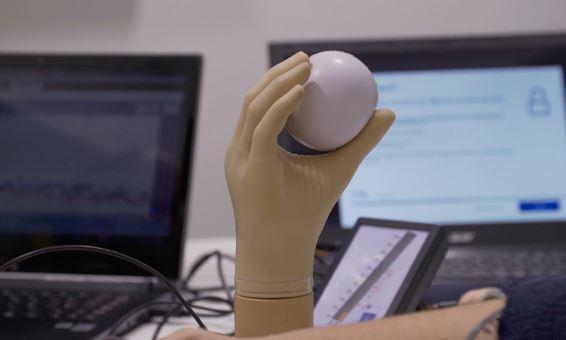
Two of the most recent patients have required an upper limb myoelectric protheses prosthesis . These types of prosthesis work from the electrical signals generated by the muscles of the body, which are captured by sensors and transformed into movements of the device. This allows users to perform permit do actions such as operating and controlling the most or executing more precise and functional movements. It is one of the most advanced and technologically complex protective options, requiring an accurate assessment and a highly personalized adaptation. Furthermore, a specific neurorehabilitation process is essential so that the person can achieve the functional effectiveness of the device.
This neurorehabilitation process is based on mechanisms of neuronal plasticity neuroplasticity and motor relearning, while the patient learns to use signals from residual muscles or reassignments (with a new function) to generate specific movements.
Global approach
Without this specific training, the use of the prosthesis turns out to be often inefficient or limited, nevertheless its high technological potential. In fact, various studies have identified that the lack of a structured rehabilitation program and specific training constitutes one of the main factors associated with poor use or abandonment of the prosthesis. According to the literature, the functional taxes of prostheses – especially in upper amputations – are limited, with both percentages of their effectiveness ranging between 25% and 56%, and abandonment taxes that can exceed 20–40%.
In this sense, the integration of neurorehabilitation, motor retraining and continued specialized support are key elements to optimize functionality, adherence and clinical results. “Having the most appropriate device is important, but it is also important to share a rehabilitation and readaptation process that allows each person to achieve maximum performance and recover, to the extent possible, their life project, social relationships, work activities and autonomy on a day-to-day basis,” explains Cristian Figueroa, deputy medical director of Guttmann Hospital de Neurorehabilitació.
Multidisciplinary team
At Guttmann, patients comprise are supported by a multidisciplinary team of professionals from physical medicine and rehabilitation, physiotherapy, occupational therapy, clinical psychology and orthopedic technique, who work in a coordinated manner to design an intervention plan tailored to the needs of each person.
Furthermore, the care model incorporates in an integrated manner the approach to common complications after amputation, such as phantom limb pain and other neuropathic pain syndromes, as well as associated hyperhidrosity, using a multimodal approach that includes specific interventional techniques.
You can see here a video about the operation of the clinic: LINK
Share


